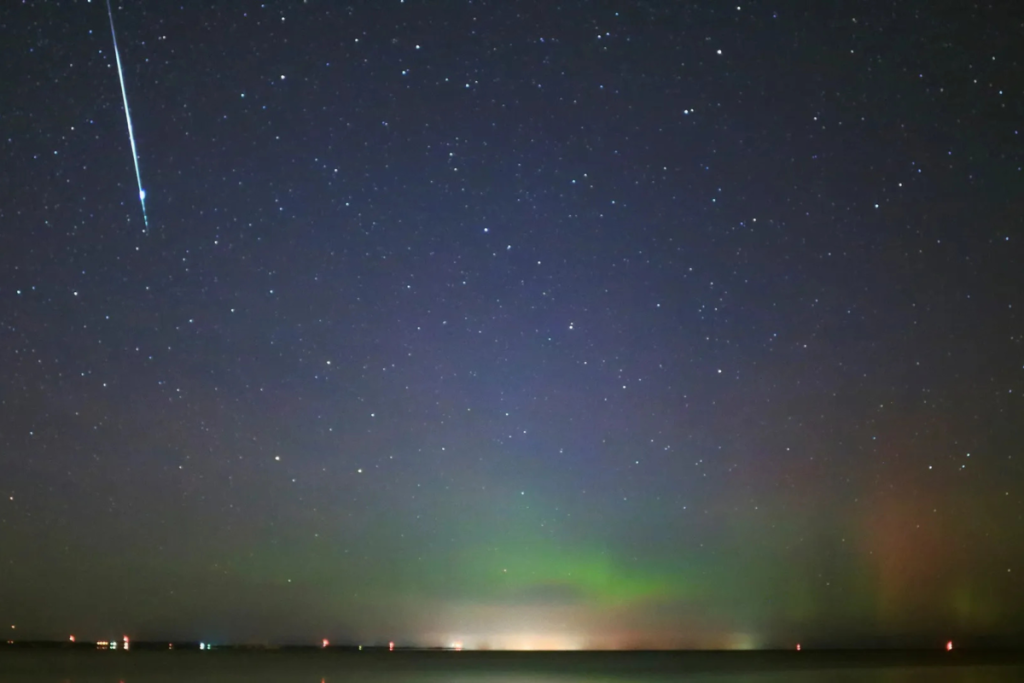

The Southern Taurid meteor shower runs from September 20 to November 20, making it one of the year’s longest-running showers. According to the American Meteor Society, its second peak falls overnight on November 4–5, when the shower offers a greater chance of bright fireballs.
Don’t expect a constant stream of meteors. According to NASA, the shower produces around five meteors per hour under ideal conditions. Still, the Southern Taurids are known for producing unusually bright meteors, making even a single sighting worth the wait.
Around midnight offers a prime viewing opportunity, when Taurus reaches its highest point in the sky. A waning crescent moon, roughly one-quarter illuminated during the peak night, will provide relatively favourable viewing conditions with limited moonlight interference.
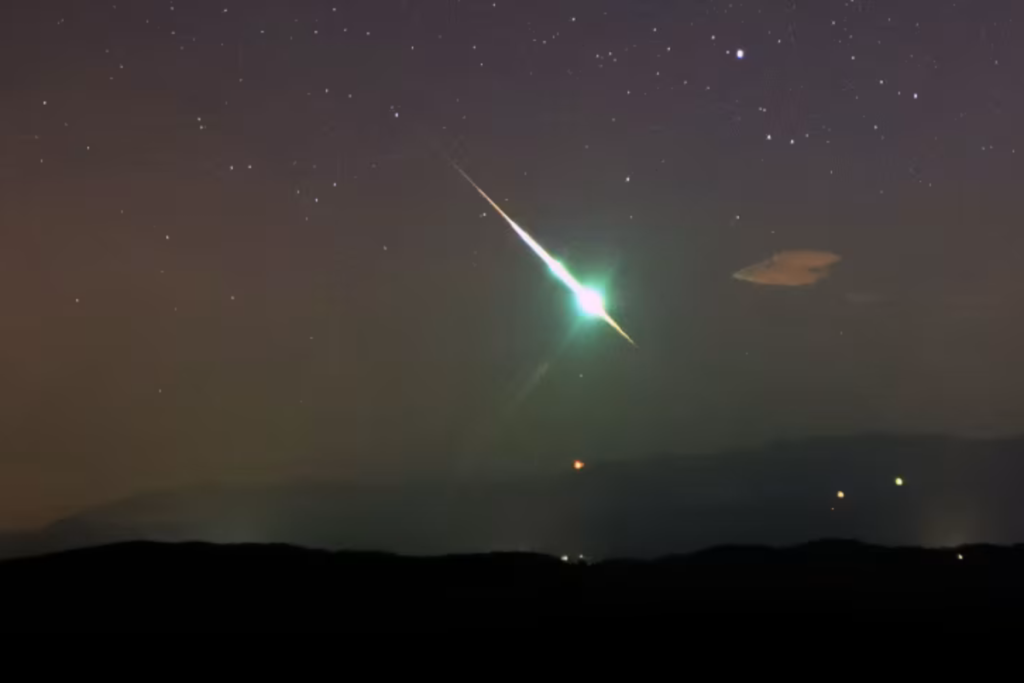
The meteors originate from debris left behind by comet 2P/Encke, which orbits the sun every 3.3 years—the shortest known orbital period of any comet.
However, Toronto’s weather could spoil the show. Environment Canada’s forecast calls for increasing cloud cover on Wednesday, November 4, followed by showers and 10 to 15 mm of rain overnight, potentially obscuring the meteor shower’s peak.
If the skies are clear, find a dark, open spot away from city lights. Dress warmly, bring a chair, and allow about 30 minutes for your eyes to adjust. Skip the telescope and scan the entire sky, not just Taurus, for the best chance of spotting a fireball.
Southern Taurid Meteor Shower 2026
- When: September 20 – November 20, 2026
- Peak: Overnight November 4–5
- Best time: Around midnight
- Where: Toronto and across the Northern Hemisphere, preferably away from city lights
- Expected activity: Around five meteors per hour under ideal conditions
- What to look for: Bright, slow-moving meteors and occasional fireballs