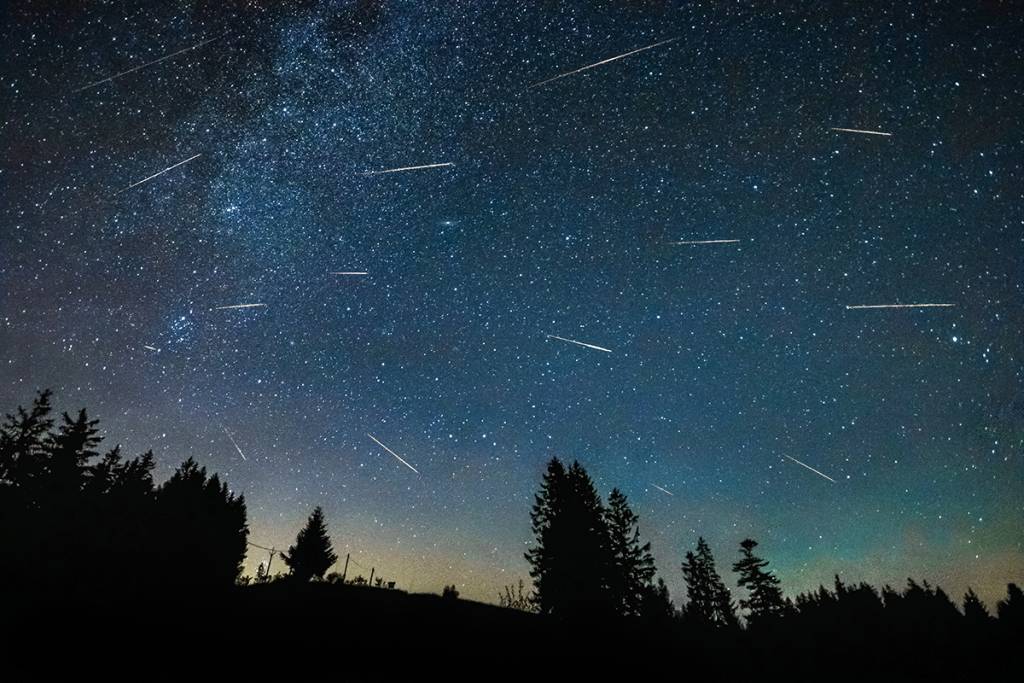

A dazzling celestial event is about to put on a breathtaking show across Ontario’s night skies this evening.
The annual Perseid Meteor Shower, widely considered one of the brightest and most dramatic meteor displays of the year, is making its highly anticipated return. During its peak, skywatchers can expect to see anywhere from 50 to 100 shooting stars zipping through the darkness every single hour.

While the meteor shower remains active from July 17 through August 24, the main spectacle takes place overnight from August 12 into the early morning of August 13. Because these meteors originate from the trail of Comet Swift-Tuttle, the highest concentration of shooting stars will occur after midnight, when the sky reaches its darkest and the radiant point climbs high overhead.
To catch the absolute best view, you will want to escape the glow of Toronto’s city lights. Luckily, several world-class stargazing destinations are located just a short drive from the GTA.
Located about two hours north of the city in Muskoka, the Torrance Barrens Dark-Sky Preserve features smooth granite bedrock and wide 360-degree views, making it a fan-favorite destination for celestial viewing.
About two and a half hours east, the Lennox & Addington Dark Sky Viewing Area offers sky clarity reminiscent of a century ago, alongside a dedicated observation deck. If you are looking for a closer trip, Binbrook Conservation Area near Hamilton sits far enough from central light pollution to deliver significantly clearer views. For anyone planning a full weekend getaway, the dark skies over Bruce Peninsula National Park provide a stunning backdrop over Georgian Bay.
The best part of the Perseid Meteor Shower is that you do not need expensive telescopes or specialized gear to enjoy it. In fact, your naked eyes offer the widest view of the open sky.
To maximize your experience, plan to arrive at your destination early so your eyes can spend 20 to 30 minutes fully adjusting to the darkness. You will also want to keep your phone tucked away, as bright screens instantly reset your night vision. Simply bring a chair, wrap up in a cozy blanket, and apply plenty of bug spray so you can comfortably sit back and watch the night sky light up.