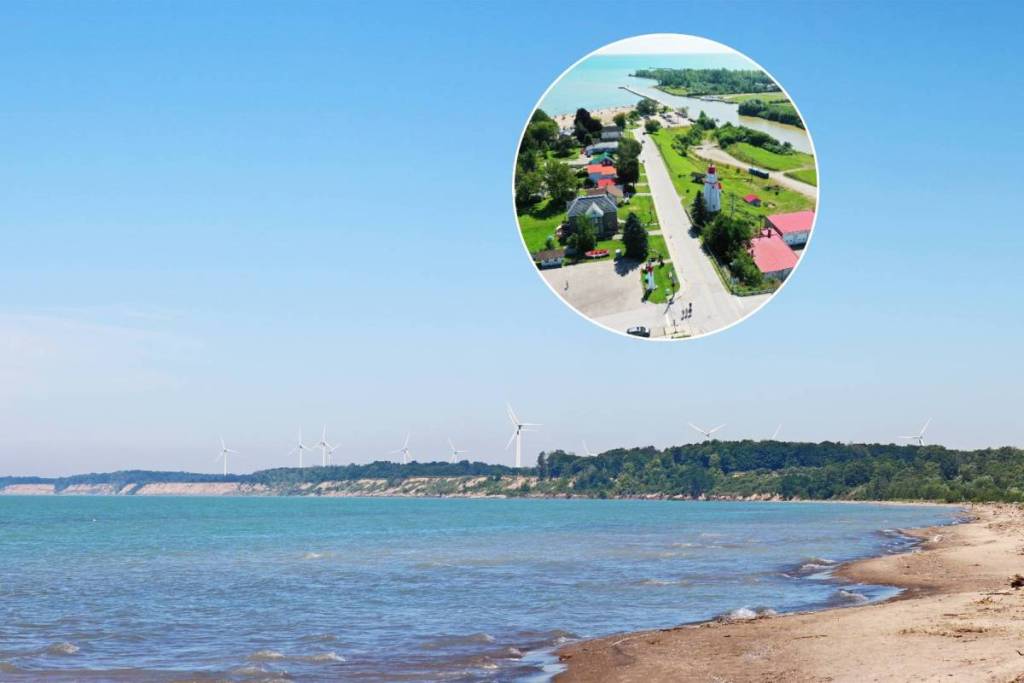

Port Burwell‘s popularity was rooted in its natural setting. Wind and water currents helped create a wide sandy shoreline, while the shallow waters of Lake Erie warmed quickly each summer. For generations, it was a favourite spot for Ontario families to spend long summer days by the water.
Before the province’s tourism landscape became crowded with competing waterfront destinations, visitors returned here year after year. Summer tourism helped shape the village’s identity and supported a thriving seasonal economy.
Walking through Port Burwell today, it’s difficult to imagine the crowds that once arrived each summer. The harbour remains active, the shoreline stretches along the lake, and the pace of life feels noticeably slower than it did during the community’s tourism peak.
What changed wasn’t the setting itself. The warm water, sandy beach, and lakeside scenery remain much the same. Instead, travel habits evolved, transportation routes shifted, and visitors gradually began exploring a wider range of destinations across Ontario.
Even so, reminders of Port Burwell’s busier days remain. An 1840 lighthouse still overlooks the waterfront, HMCS Ojibwa—a Cold War-era submarine—sits near the harbour, and a provincial park protects much of the surrounding landscape. While the village no longer attracts the volume of visitors it once did, it remains one of Lake Erie’s quieter and more overlooked beach destinations.
The Need To Know Details
- What: A Lake Erie beach village with 2.5 kilometres of Blue Flag-certified sandy shoreline, a historic 1840 lighthouse, HMCS Ojibwa submarine tours, and a 239-hectare provincial park. Located on the warmest of the Great Lakes, Port Burwell became a popular summer destination in the early 20th century and remains a quieter alternative to many of Ontario’s busier beach towns
- Location: Port Burwell, Elgin County, Ontario. On Lake Erie’s north shore
- Distance from Toronto: Approximately 2.5 hours by car via Highway 401