
You arrive at Evergreen Brick Works around 7:00 p.m. and immediately realize this is not the kind of experience most people ever slow down enough to have. The crowds are gone, the air is quieter, and the evening light turns everything gold.
As the group gathers, your guide from the Toronto and Region Conservation Authority (TRCA) says something that changes the entire mood.
“Turtles have existed for more than 200 million years. They survived the asteroid that wiped out the dinosaurs. Tonight, we are going to watch them continue a ritual older than humanity itself.”
Suddenly, the walk feels less like an event and more like stepping into something ancient. The group grows quieter. You start noticing every sound around you. Then, just as the sun begins to disappear, the first turtle slowly emerges from the water.
Turtles At Twilight
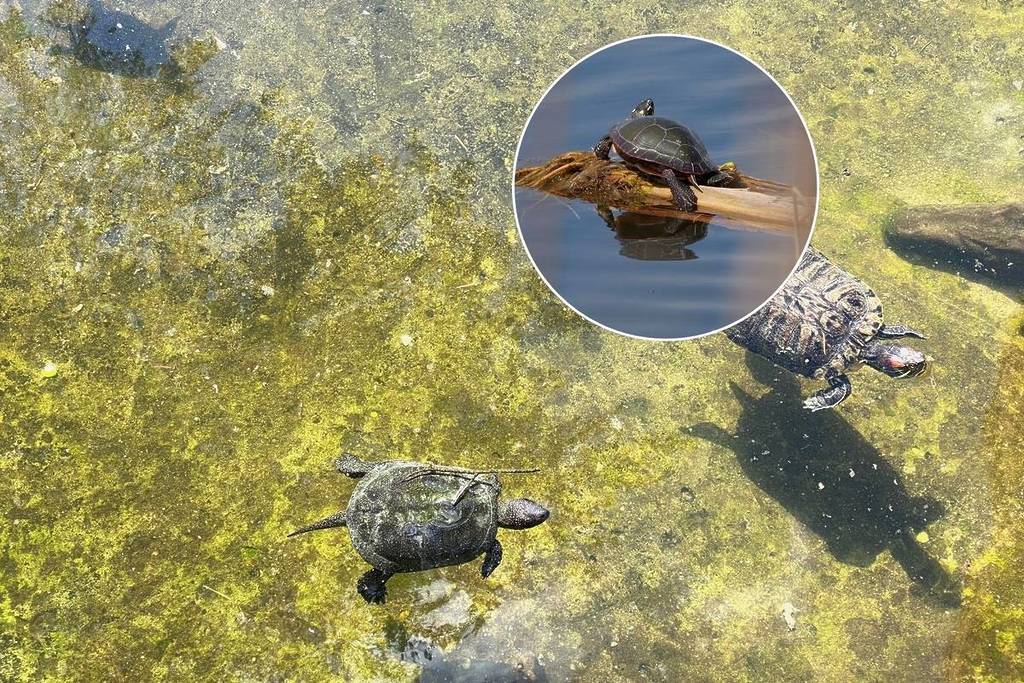
This is the Turtles at Twilight field trip. It is not a museum exhibit or a classroom lecture about conservation. It is you walking through wetland trails at dusk, watching painted turtles and snapping turtles emerge from the water as the park quiets down for the evening.
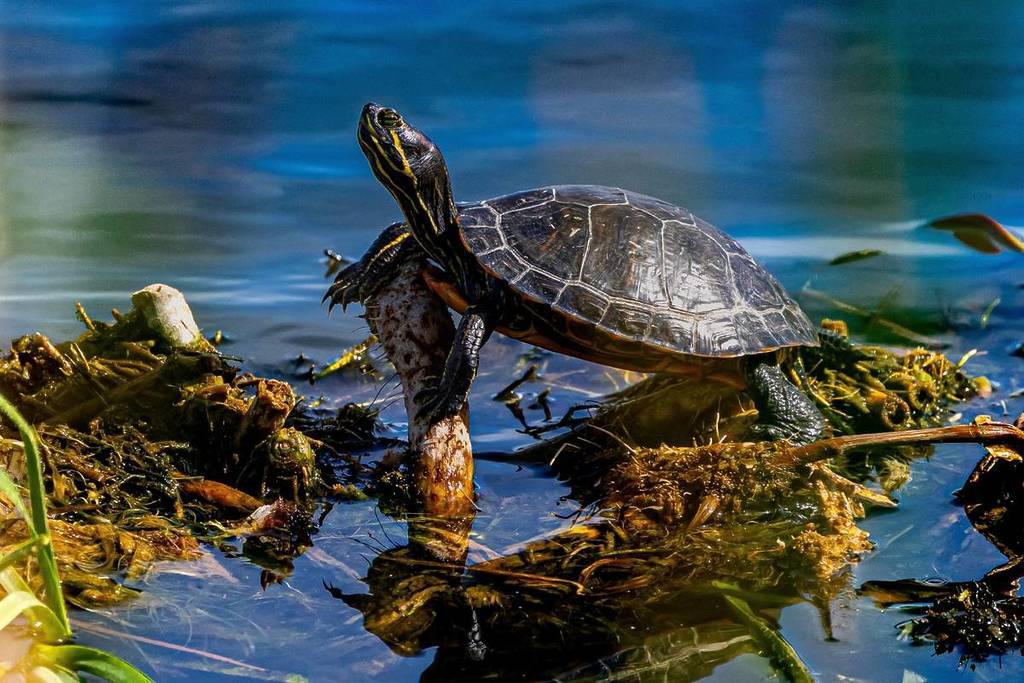
You quickly learn that turtle watching is really about patience. The longer you stand still, the more the wetlands begin to reveal themselves. A ripple in the water. Movement along the shoreline. A turtle slowly climbs onto a log to bask in the last light of the day.
Along the way, you also learn something more serious: Ontario is home to eight species of freshwater turtles, and five of them are considered at risk. These turtles play a critical role in keeping wetland ecosystems healthy, which makes protecting them far more important than most people realize.
Slow Down And Pay Attention
Kids on the field trip learn to identify turtles by their shell shape, markings, and movement. Guides bring real shells and carapace models that children can hold and examine up close. There are binoculars, clipboards, and turtle sighting sheets that make the experience feel like real field research instead of a regular nature walk.
Every turtle spotted along the trail gets recorded. By the end of the evening, the group has helped create a citizen science record that supports the Toronto and Region Conservation Authority’s ongoing monitoring of turtle populations and wetland health at Evergreen Brick Works. You are not just learning about conservation. You are actively participating in it.
Turtles are most active at dusk, when the air begins to cool and the last light of the day settles over the wetlands. At Evergreen Brick Works, twilight feels almost unreal. The city noise softens, the ponds grow still, and the sounds of daytime birds fade into the quieter rhythm of the evening wetlands. This moment is when the turtles begin to emerge.
The Need To Know Details
- Park rules: Stay on designated trails. Do not remove anything from the park. Respect wildlife; observe from a distance. No pets. No motorized vehicles. Weekday evenings: Accessible portable toilets throughout the park.
- Location: Evergreen Brick Works. 550 Bayview AvenueToronto, ON, M4W 3X8
- When: Saturday, May 23, 2026, 7:30 p.m. to 9:30 p.m.
- What to expect: A guided 2-3 km walk through wetland habitats. Turtle observation and identification. Shell and carapace models to touch and learn from. Binoculars provided. Sighting records kept as citizen science. Water and snacks provided. Plan for an average of 5-7 turtle sightings. Mosquito spray recommended.
- Booking: Book through https://www.rciscience.ca/events/2026/field-trips-turtles-at-twilight
- What to bring: Comfortable walking shoes with good grip (terrain can be muddy). Rain jacket or light sweater (temperature drops at dusk). Closed-toe shoes recommended. Insect repellent/mosquito spray. Camera or phone for recording sightings. Water bottle. Notebook for observations. Avoid perfume, which attracts insects.