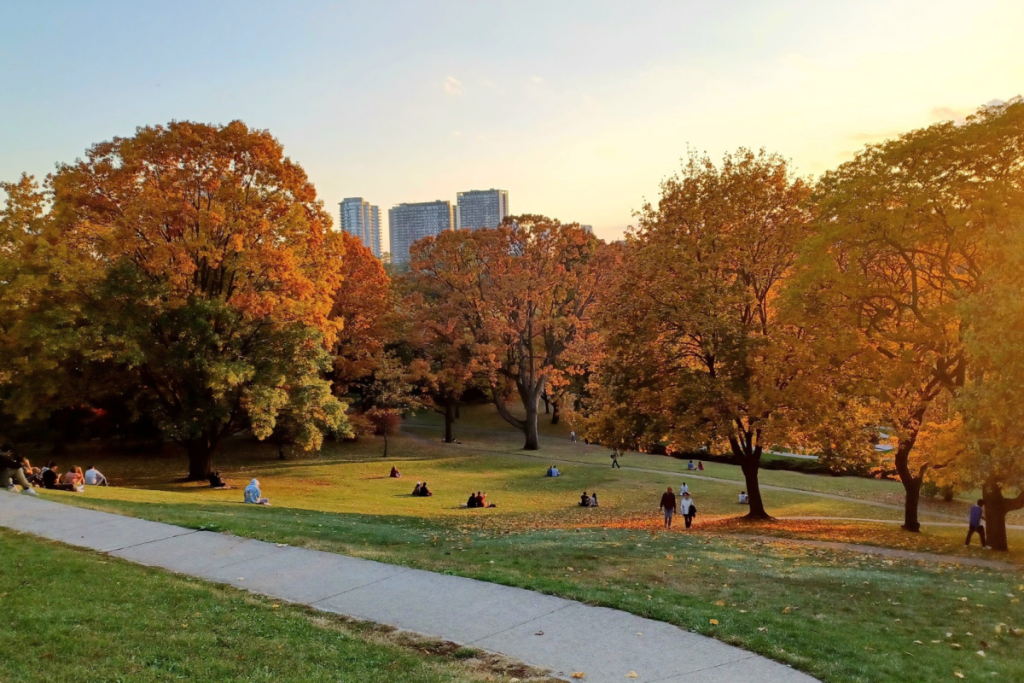

A historic El Niño event unfolding thousands of kilometres away could influence how autumn colours develop across parts of Canada.
But El Niño doesn’t directly change leaf colours. Instead, it affects the weather conditions that shape the fall season. In its October 8 update, NOAA said an El Niño Advisory remains in effect, with an 83% chance the event exceeds the strength of previous El Niños dating back to 1950. While its biggest impacts are usually felt in winter, The Weather Network expects much of Ontario to see warmer-than-normal temperatures, less rainfall, and fewer classic autumn storms this fall.
That matters because fall colour is largely driven by temperature, sunlight, and moisture. As days shorten and chlorophyll fades, cool nights and sunny days help produce vivid reds, while warmer temperatures can slow the process and dry conditions may dull colours.
Colour Outlook
A mild, relatively dry autumn could lead to a slower, longer-lasting colour season, though it doesn’t guarantee more vibrant foliage. As of early October, southern Ontario destinations were progressing at different rates. Bronte Creek was reporting about a 40% colour change, while Forks of the Credit had reached roughly 70%. Farther north, Algonquin Provincial Park was already at about 90% colour change.
The warmer pattern is expected to strengthen later in the season, potentially helping colours linger beyond their usual peak and delaying the arrival of winter.
If you’re planning a leaf-peeping trip, don’t assume one weekend tells the whole story. Colours can shift dramatically from week to week, so check local fall colour reports before heading out and treat seasonal forecasts as a guide rather than a guarantee.