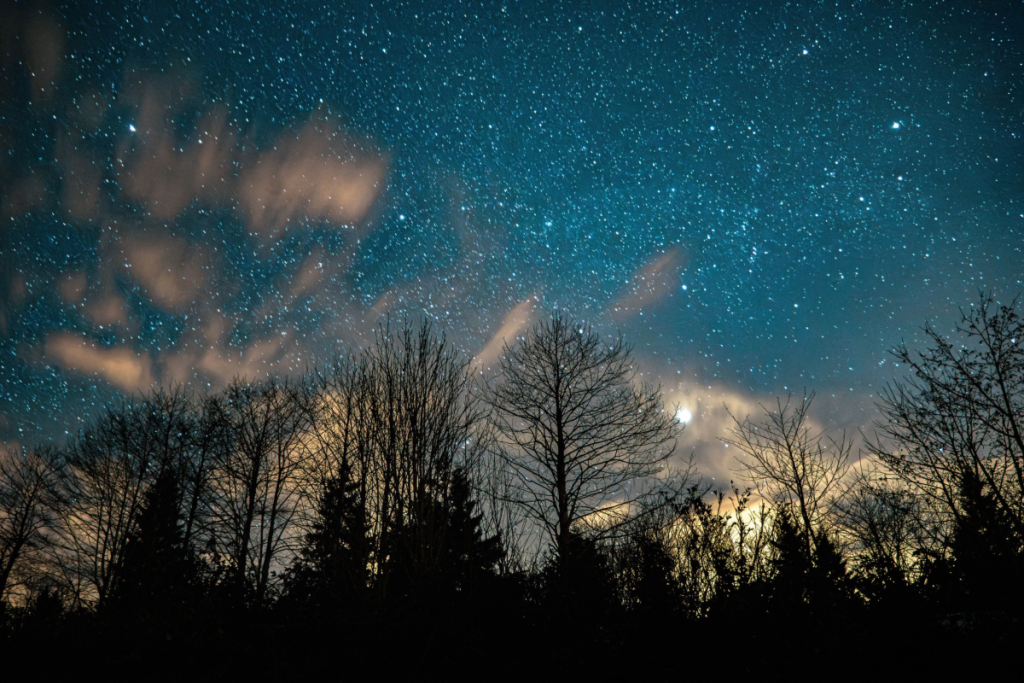

The Leonid meteor shower reaches its expected peak around November 17, with viewing opportunities overnight into Wednesday, November 18. While active from November 6 to 30, the shower offers its strongest activity around the peak.
According to the Farmers’ Almanac, the best viewing hours are midnight to around 5:30 a.m., when the constellation Leo rises higher in the sky.
Moonlight should have limited impact on early-morning viewing. The Moon reaches its first-quarter phase on November 17 and will be approximately 55% illuminated, setting around 12:14 a.m. in Toronto on November 18. This leaves the remaining pre-dawn hours free from moonlight.
This isn’t a meteor storm year, but the Leonids could produce up to 15 meteors per hour under ideal conditions. Actual sightings may be fewer, depending on viewing conditions.
The meteors appear to radiate from the constellation Leo, near the bright star Regulus, and originate from debris left behind by comet 55P/Tempel-Tuttle.
For the best views, head away from Toronto’s city lights, find a clear spot, and dress warmly for the November cold. Give your eyes 20 to 30 minutes to adjust to the darkness without checking your phone.
No telescope or binoculars are needed. Simply lie back and watch the sky. Be sure to check the local forecast before heading out, as cloud cover could block the display.
Details
- When: November 6–30, 2026
- Peak: Around November 17, with viewing opportunities into November 18
- Best viewing hours: Midnight–5:30 a.m. (local time)
- Where: Dark areas away from Toronto’s city lights
- Where to look: Toward Leo in the eastern to southeastern sky, or scan the wider sky
- Expected activity: Up to 15 meteors per hour under ideal conditions
- Moon conditions: First-quarter Moon, setting around 12:14 a.m. on November 18
- Equipment: None required