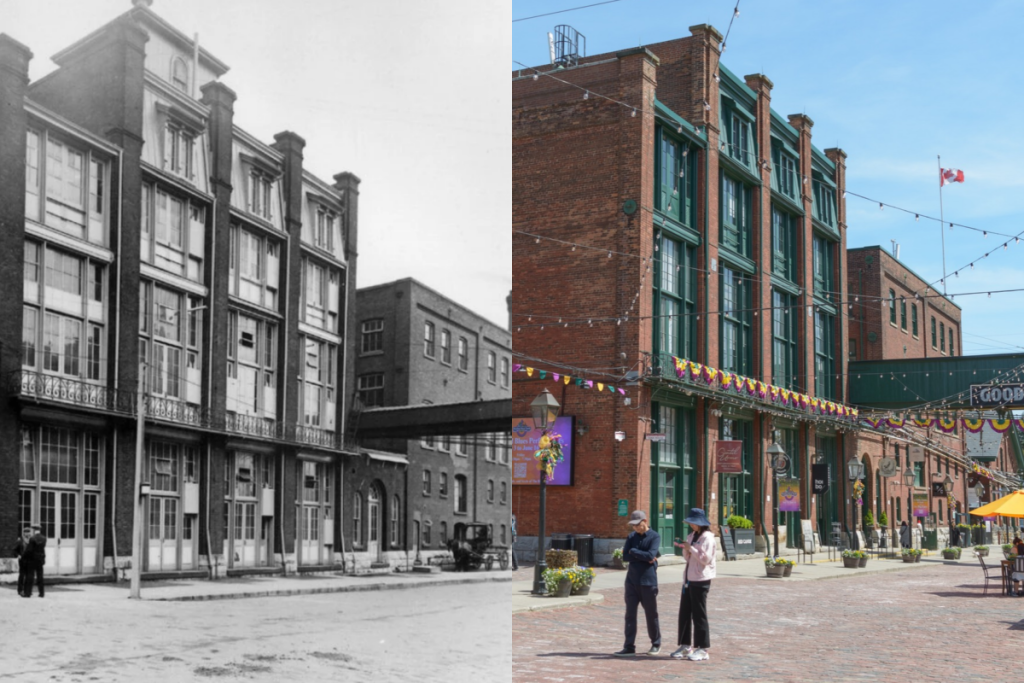

If you’ve taken a stroll down the cobblestone streets of Toronto’s Distillery District while browsing its many artisan galleries or grabbing a bite at a patio, it’s hard to imagine the area as anything other than one of Toronto’s most picturesque neighborhoods.
However, 189 years ago, the Gooderham & Worts distillery at the neighbourhood’s core once produced millions of gallons of whiskey in industrial red-brick mills.
Here is how a 19th-century industrial heavy hitter completely reinvented itself to become a staple of Toronto’s modern culture scene.
1800s: A 19th-Century Industrial Powerhouse
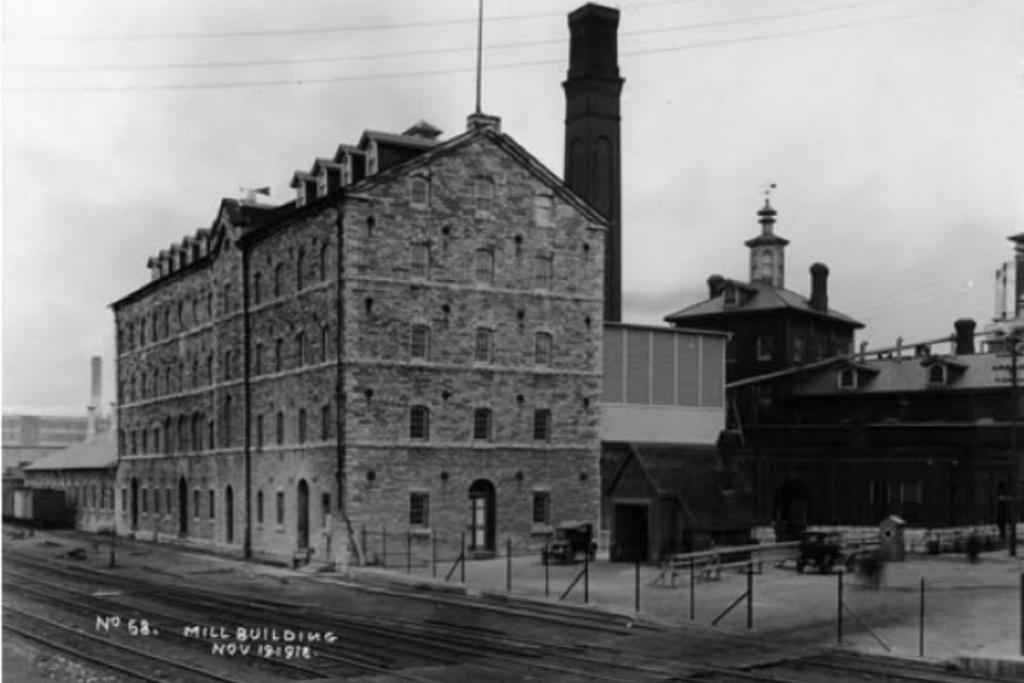
Back in the 1800s, the corner of Mill Street and Trinity Street was far from a relaxed weekend afternoon destination. Founded by brothers-in-law James Worts and William Gooderham, the site started as a simple windmill-powered flour mill in 1832 before quickly pivoting to commercial spirit distilling.
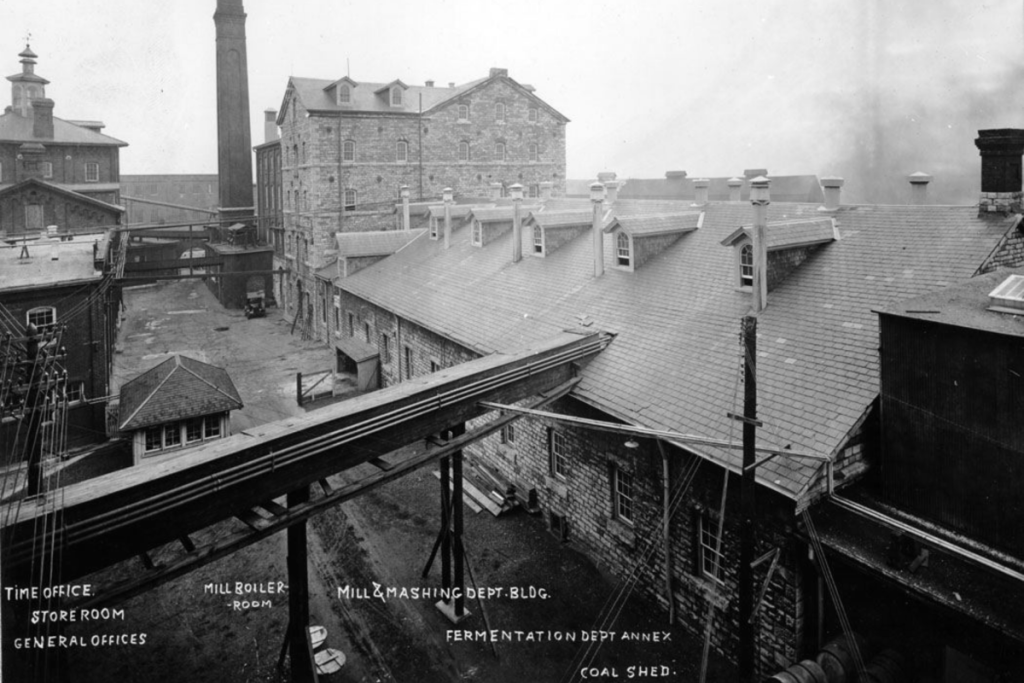
By the 1860s, the Gooderham & Worts Distillery had grown into the largest distillery complex in the world. At its peak, the industrial giant was producing over 2 million imperial gallons of spirits annually, shipping whiskey across the globe and contributing a massive chunk of tax revenue to the Canadian government.
The Victorian-era red-brick mills, stone rack houses, and ironworks weren’t built for aesthetics; they were built for raw industrial output, heavy equipment, and continuous transport along the lakefront railway lines.
1990s: Leaving Heavy Industry Behind
As the decades rolled on, changing manufacturing practices, shifting shipping logistics, and corporate mergers slowly brought production to a halt. The district was then recognized as a National Historic Site of Canada in 1988. By 1990, official distilling operations ended permanently, leaving behind 47 historic buildings across a 13-acre site.
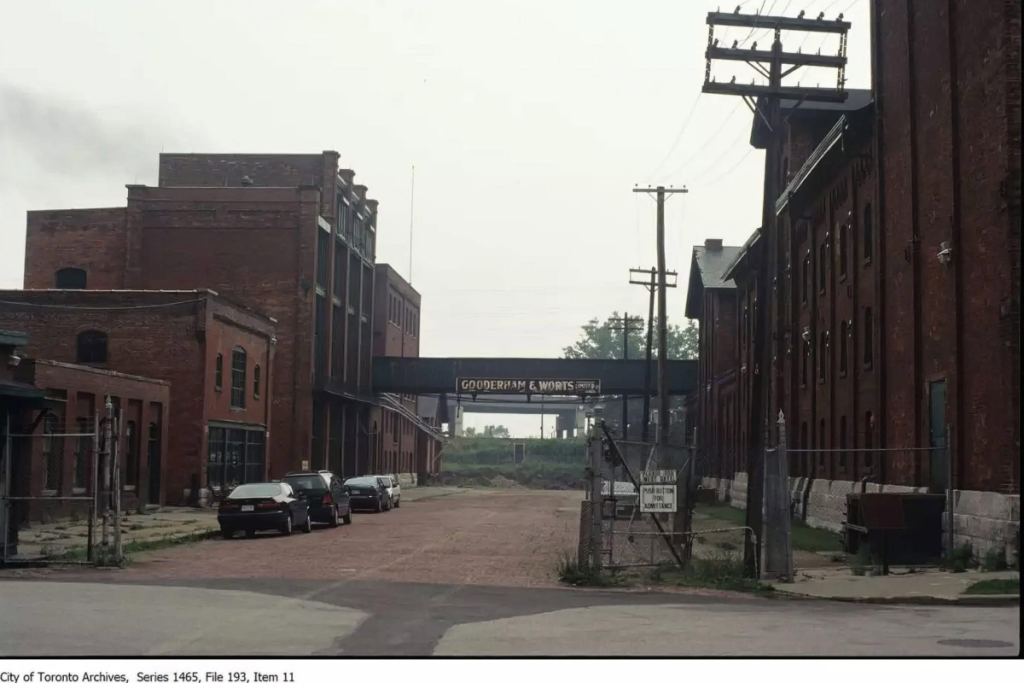
For a period in the 1990s, the decommissioned site became a playground for Hollywood north, serving as a backdrop for hundreds of film and TV productions – including X-Men, Chicago, and Cinderella Man.
Today: Toronto’s Premier Pedestrian Arts & Culture District
In 2003, the complex officially reopened after a massive restoration project guided by a bold vision: convert the heavy industrial relic into a purely pedestrian-only district dedicated to culture, local business, and the arts.
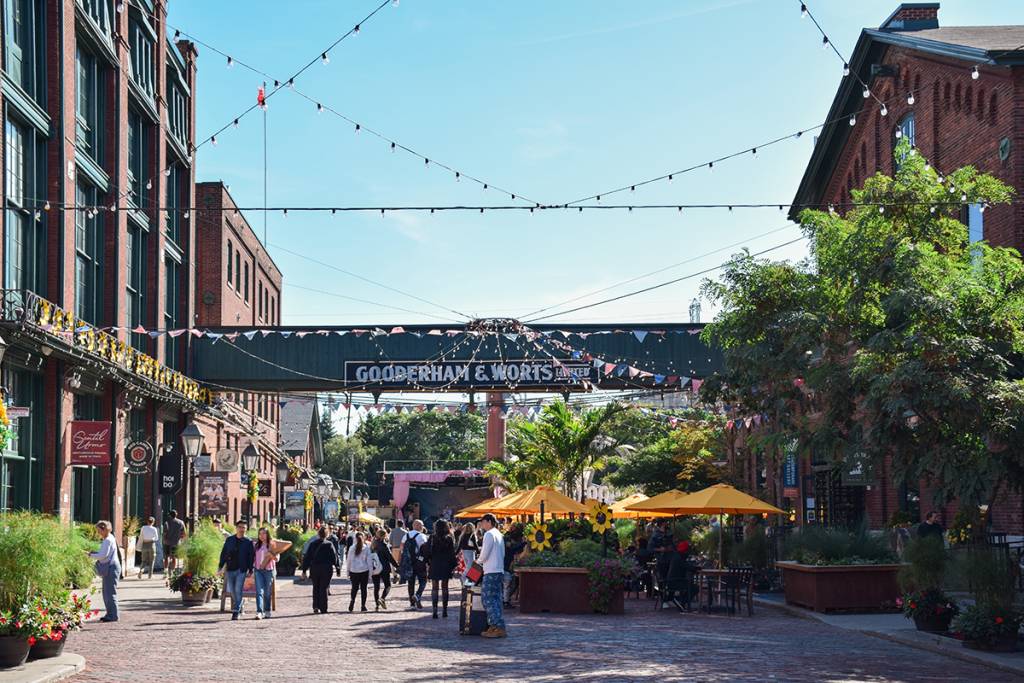
Instead of knocking down the crumbling brick facades for high-rise condos, developers restored the largest and best-preserved collection of Victorian-era industrial architecture in North America.
Today, the Distillery Historic District is completely closed off to cars and features dozens of artisan shops and galleries, food and drink spanning everything from fine dining at Cluny Bistro to craft brews at Mill Street Brewery, hand-made chocolates at SOMA, and, of course, the annual Toronto Winter Village. This annual holiday transformation featuring a towering Christmas tree, light installations, and festive outdoor vendors that draws visitors from all across the province and beyond.

Whether you’re taking in a show at the Young Centre for the Performing Arts or taking photos under the iconic “Love” locks sign, the Distillery District stands as one of the best examples of adaptive reuse in the city – turning a heavy manufacturing past into an essential part of Toronto’s modern identity.