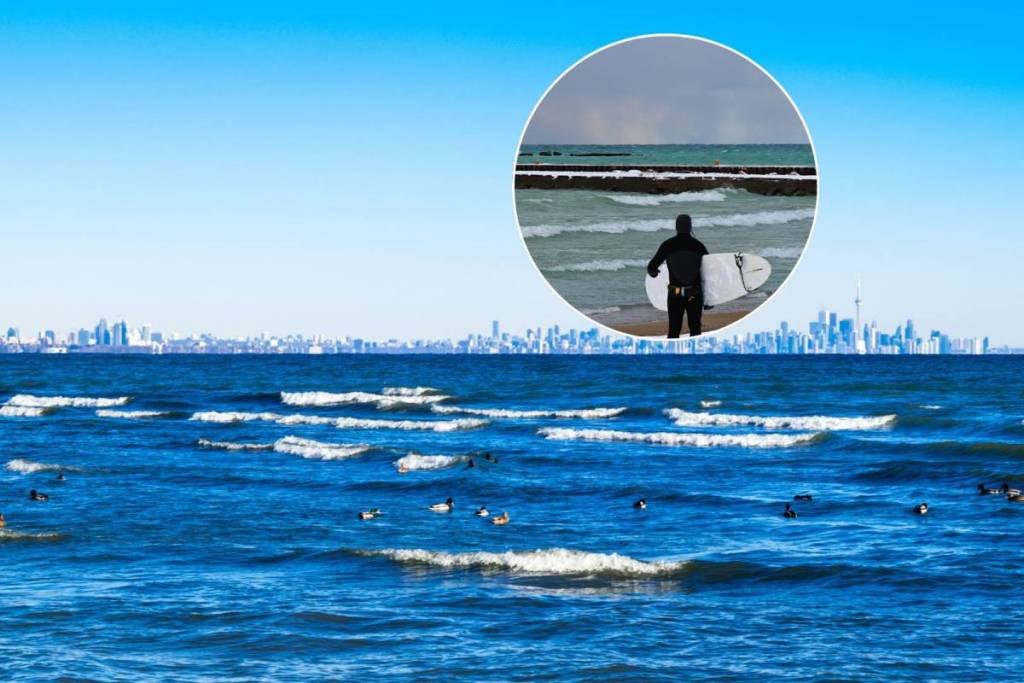

Toronto’s surf season runs from September through May, with the biggest waves typically arriving from late fall through winter. As storm systems sweep across the Great Lakes, strong winds generate swells that travel across Lake Ontario.
When conditions align, popular spots like Ashbridges Bay, Bluffers Park, and the Scarborough Bluffs come alive with surfers chasing freshwater waves generated kilometres offshore. What begins as a winter storm can, within hours, transform an ordinary city beach into one of Canada’s most unexpected surfing scenes.
The conditions are as challenging as they are rewarding. Mid-winter water temperatures can approach freezing, while winter air temperatures can drop well below freezing. Surfers rely on thick wetsuits, hoods, gloves, and booties to withstand the cold, often navigating icy water, strong currents, and rocky shorelines.
Despite the risks, the community keeps showing up. During strong storms, a flat lake can transform into three-to-six-foot swells within hours, only to return to calm conditions just as quickly. It’s a short-lived window that demands timing, resilience, and a willingness to surf in some of Canada’s harshest conditions.
The appeal goes far beyond the waves themselves. It’s the contrast of surfing against a Toronto backdrop, with city skylines replacing palm trees and snow lining the shore. It’s the thrill of watching a calm lake transform into a surf break and sharing the experience with a close-knit community that gathers whenever conditions align.
For those willing to brave the cold and track the weather, Great Lakes surfing offers something few people realize exists. In a city better known for its skyline, sports teams, and cultural attractions, a hidden surf culture has quietly emerged—one built around chasing waves where most people would never think to look.
The Need To Know Details
- Safety & requirements: A thick cold-water wetsuit (typically 5/4mm or thicker), hood, gloves, and booties are essential during colder months. Surfers should be aware of strong currents, cold-water exposure, rocky entries, and rapidly changing weather conditions. Never surf alone and always check forecasts before heading out
- What: Lake Ontario produces surfable freshwater waves during powerful windstorms. Toronto’s surfing community chases these seasonal swells, which can reach three to six feet or more in strong conditions
- When: September to May, with the most consistent surf arriving from late fall through winter. Waves can develop within hours as storm systems move across the Great Lakes
- Where: Ashbridges Bay is Toronto’s best-known surf break, while Bluffers Park, the Scarborough Bluffs area, Cherry Beach, and Woodbine Beach also see surfable conditions. Beachway Park in Burlington and Prince Edward County are popular destinations elsewhere on Lake Ontario