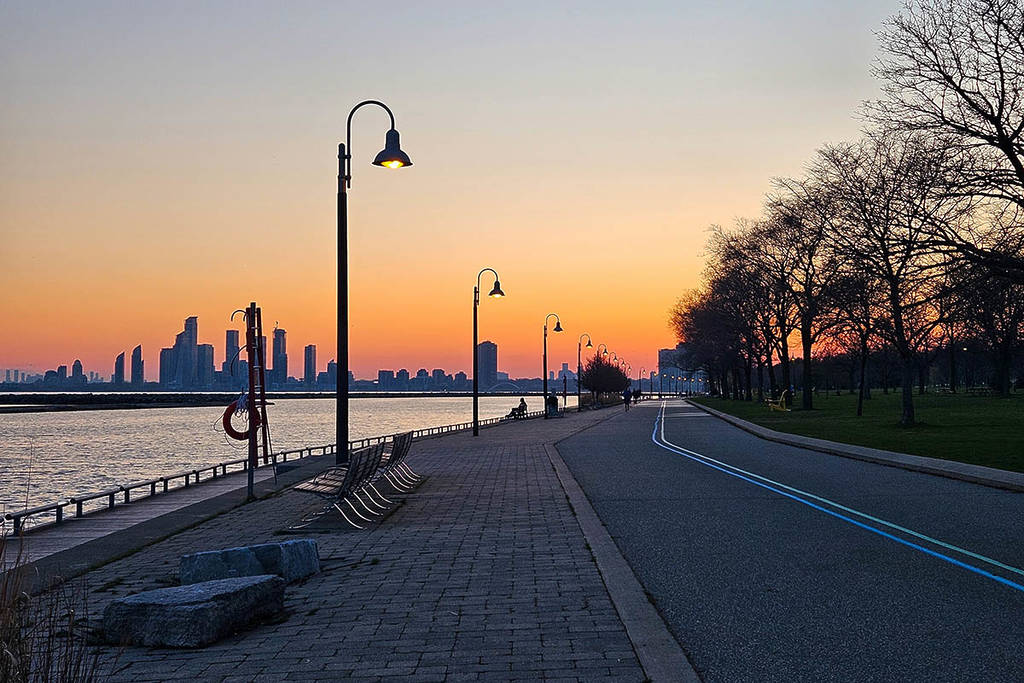
Now that fall has arrived, it’s hard not to think ahead to the looming winter months ahead. Currently, the sun sets in Toronto around 6:30 p.m., but in just over a month, clocks will turn back one hour, bringing shorter days and longer evenings as we creep towards winter. Here’s what to know:
When Does Daylight Saving Time End in 2025?
Daylight Saving Time this year ends on Sunday, November 2, 2025, at 2 a.m. At that time, clocks will turn back one hour to 1 a.m., marking the return to Eastern Standard Time. This shift means Torontonians will gain an extra hour of sleep as we “fall back”.
Although most people welcome the bonus hour of rest, the change also signals shorter days and earlier sunsets as we head into the winter months.
What Parts of Canada Are Affected by the Time Change?
The time shift impacts six Canadian time zones: Pacific, Mountain, Central, Eastern, Atlantic, and Newfoundland, though Newfoundland’s time change is offset by 30 minutes from Atlantic Time.
A Brief History of Daylight Saving Time
Daylight Saving Time was first proposed in 1895 by George Hudson, a New Zealand entomologist who wanted more daylight in the evening hours during the warmer months. It wasn’t until 1916 that Germany became the first country to implement the idea, primarily as a way to reduce energy usage during World War I.
Since then, the practice has been adopted by many countries, including most parts of Canada and the United States, though not universally.
Who Doesn’t Observe Daylight Saving Time?
All major cities and most regions across Ontario, including Toronto, observe Daylight Saving Time. However, some parts of Northern Ontario, along with select provinces like Saskatchewan and Yukon, do not participate and remain on standard time throughout the year.
Is Daylight Saving Time Going Away?
There’s been growing momentum to eliminate Daylight Saving Time altogether. In November of 2020, Ontario even passed a bill to eliminate the practice completely, arguing that DST disrupts natural sleep cycles and may contribute to health issues, including depression and seasonal affective disorder. As well, the City of Toronto reminds residents that collisions involving pedestrians tend to rise during this period, particularly during the evening rush hour, due to reduced visibility from earlier sunsets.
In order for the bill to pass, Ontario is relying on the Government of Quebec and New York State to approve similar laws, as the regions are closely connected.
When Does Daylight Saving Time Return in 2026?
From November 2, Toronto will be back on Standard Time. We will return back to Daylight Saving Time on Sunday, March 8, 2026.